
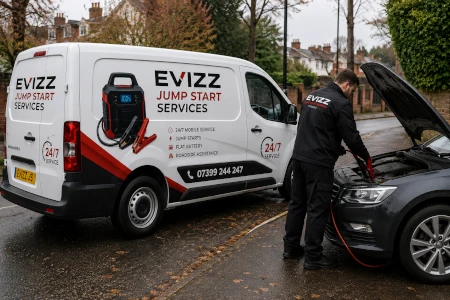
Electric vehicles are becoming increasingly common on UK roads, but many drivers are still unsure what to do if an EV refuses to start. Unlike traditional petrol or diesel vehicles, electric cars have different battery systems and require a different approach when dealing with a flat battery situation.
Understanding how EV batteries work and following a few simple precautions can help you avoid unexpected breakdowns and expensive recovery costs.
Understanding EV Batteries
Most electric vehicles have two separate batteries:
- A high-voltage traction battery that powers the vehicle.
- A smaller 12-volt battery that operates the vehicle’s electronics, locking system, lights and onboard computers.
In many cases, when an electric vehicle appears completely dead, the problem is not the main traction battery but the smaller 12-volt battery. If this battery becomes discharged, the vehicle may not unlock, start or engage its systems.
EV Jump Start Safety
Electric vehicles should never be treated like conventional vehicles when attempting a jump start.
Before doing anything, always consult the vehicle manufacturer’s guidance. Modern EVs contain high-voltage systems that can be dangerous if handled incorrectly.
Some important safety tips include:
Never Attempt to Jump the High-Voltage Battery
The main traction battery should never be jump started. These systems operate at extremely high voltages and require specialist equipment and training.
Only Use Approved Jump Starting Methods
If the 12-volt battery is flat, some manufacturers allow the use of a booster pack or jump leads connected to designated terminals. Always follow the instructions provided by the vehicle manufacturer.
Wear Protective Equipment
If you need to access the battery compartment, use appropriate safety precautions and avoid touching any orange-coloured cables, which typically indicate high-voltage components.
Call Professional Assistance
If you are unsure about the cause of the problem, professional roadside assistance is the safest option. Incorrect handling can damage expensive electrical systems and may void warranties.
Common Causes of a Dead EV Battery
Many EV breakdowns are preventable. Some of the most common causes include:
Leaving the Vehicle Unused for Long Periods
Even when parked, electric vehicles continue to use small amounts of power for security systems, connectivity features and battery management systems.
Extreme Temperatures
Cold weather can reduce battery efficiency and place additional strain on the 12-volt battery. Very hot weather can also affect battery performance.
Frequent Short Journeys
Regular short trips may not allow sufficient charging of the auxiliary battery, particularly during winter months.
Software and Electronic Drain
Features such as remote monitoring apps, dash cameras, interior lights and accessories can slowly drain the battery over time.
How to Prevent Your Car Battery from Dying
Whether you drive an electric vehicle, hybrid or conventional car, these simple habits can help maintain battery health.
Drive Your Vehicle Regularly
Vehicles that remain stationary for extended periods are more likely to develop battery problems. A regular drive helps maintain battery charge levels.
Keep the Battery Charged
For EV owners, maintaining the manufacturer’s recommended charge range can help preserve battery health and reduce stress on the system.
Avoid Leaving Accessories Running
Always ensure lights, heated seats, entertainment systems and charging accessories are switched off when leaving the vehicle.
Monitor Battery Health
Many modern vehicles provide battery health information through their dashboard or mobile applications. Pay attention to warning messages and charging irregularities.
Protect Against Extreme Weather
If possible, park in a garage or sheltered area during periods of severe heat or cold.
Have the Battery Checked
Regular inspections can identify a weakening battery before it leaves you stranded. This is especially important for vehicles that are more than three years old.
What To Do If Your EV Won’t Start
If your electric vehicle will not start:
- Check for warning messages on the dashboard.
- Confirm the vehicle has sufficient charge.
- Check whether the 12-volt battery may be discharged.
- Consult the manufacturer’s guidance.
- Contact a professional roadside assistance provider if the issue remains unresolved.
Attempting repairs without proper knowledge can create safety risks and lead to costly damage
Jump Start Service Across England
We provide mobile jump start service across England, helping drivers with flat batteries, EV 12-volt battery issues, roadside battery problems and emergency vehicle starting support.
Our coverage includes key county areas such as Hertfordshire, Bedfordshire, Buckinghamshire, Northamptonshire, Oxfordshire and Berkshire.